Data and information on operating hours, operating concepts and flight routes at Zurich Airport.
Flight movements –Operating hours, concepts and routes

Arrival and Departure Routes
As an aircraft approaches its destination, it begins its descent. From the airway structure, the aircraft is guided into the holding pattern, which serves as a “buffer zone” during periods of high traffic. From the holding pattern, aircraft are directed by air traffic control toward the final approach, which is defined by the Instrument Landing System (ILS).
The ILS enables safe landings even in poor visibility conditions. Highly precise ground based transmitters and a cross pointer instrument in the cockpit provide continuous guidance throughout the final approach, indicating whether the aircraft is aligned with the runway centerline (localizer guidance) and descending at the correct angle (glide path guidance).
Arrival Routes
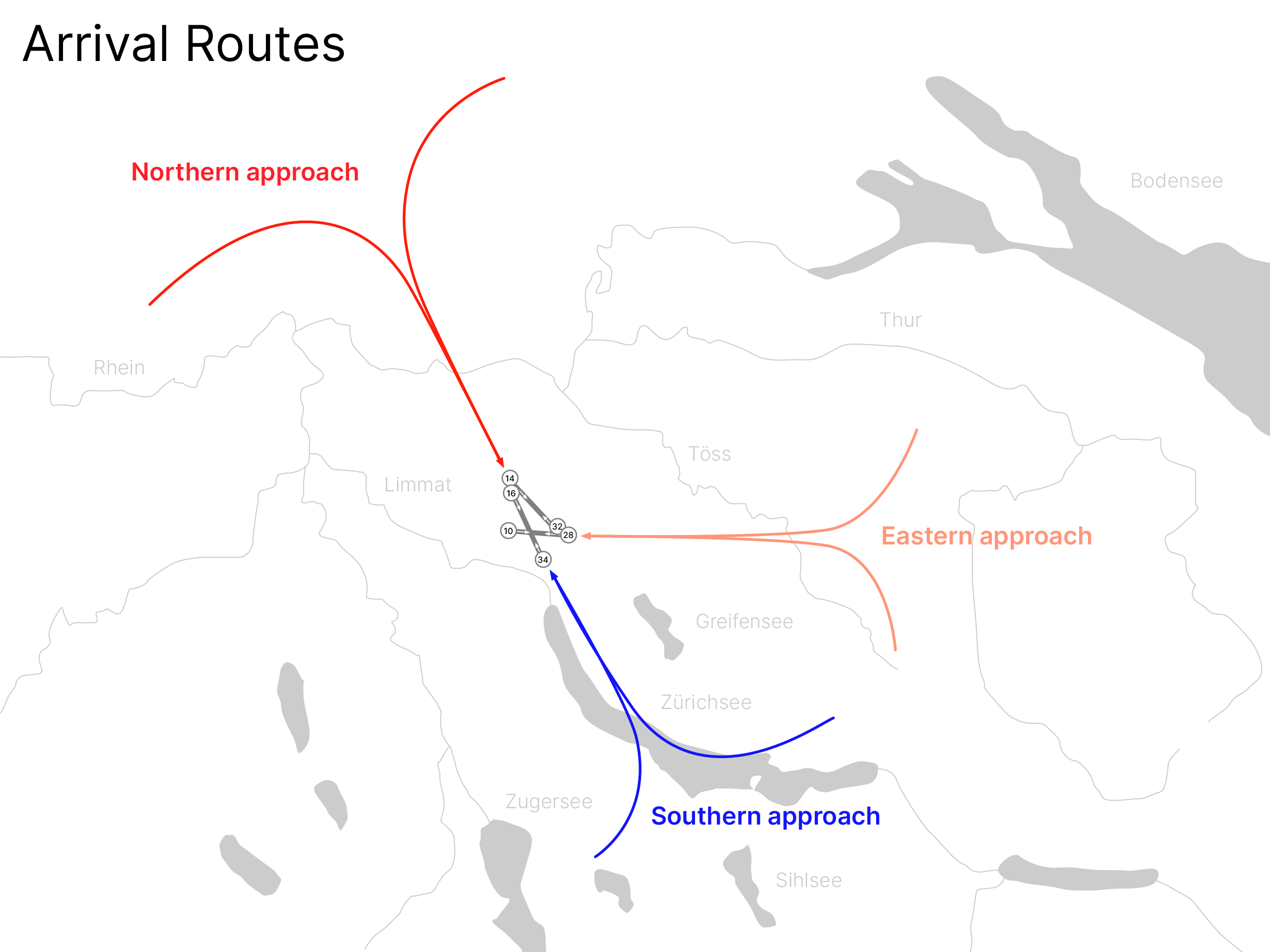
To ensure that aircraft can land safely and reliably at Zurich Airport, the approach routes are clearly defined and flown using modern navigation systems. These routes take into account terrain, weather, wind conditions and safety requirements. Before an aircraft turns onto the final approach path, it is guided along so called transitions. These standardized route segments ensure that aircraft arriving from different directions merge in an orderly way. This keeps traffic stable, well sequenced and predictable, even during busy periods.
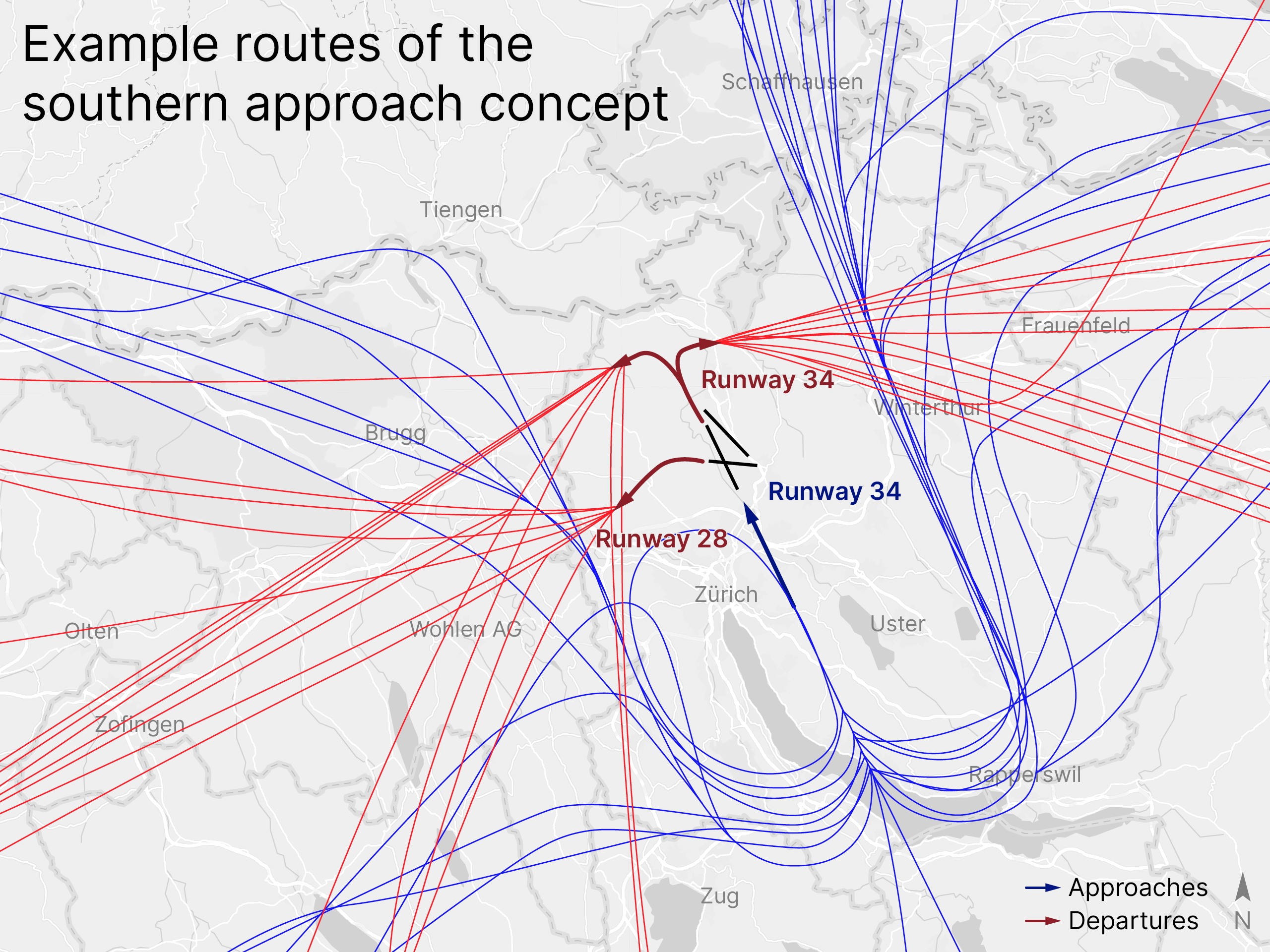
The choice of approach direction depends largely on the current weather situation. Tailwind is avoided because it can destabilize landings. For example, during North-easterly wind conditions (Biswind) in the evening, the southern approach concept with landings on Runway 34 is used, as approaches from the east would otherwise involve tailwind.
To ensure the long term precision of the navigation systems (such as ILS, RNAV procedures and approach aids), standardized inspection flights are carried out twice a year. A specially equipped calibration aircraft checks all relevant signals and procedures: the accuracy of the approach navigation, the stability of radio beacon and satellite signals, compliance with the prescribed altitude profiles, and the safety and availability of the landing systems in all weather conditions. These inspection flights are an internationally required quality measure and ensure that every landing in Zurich meets the highest technical standards.
Departure Routes
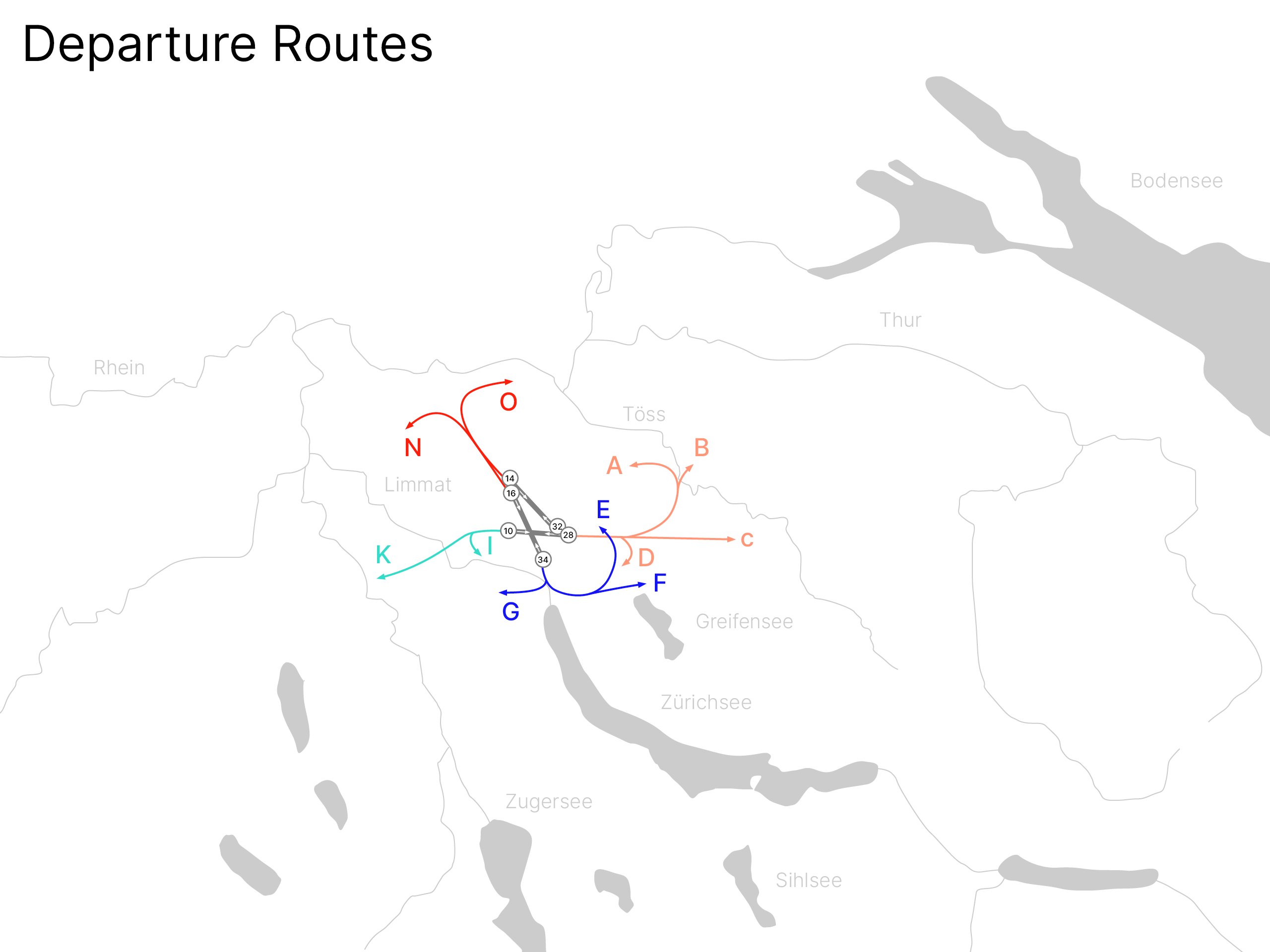
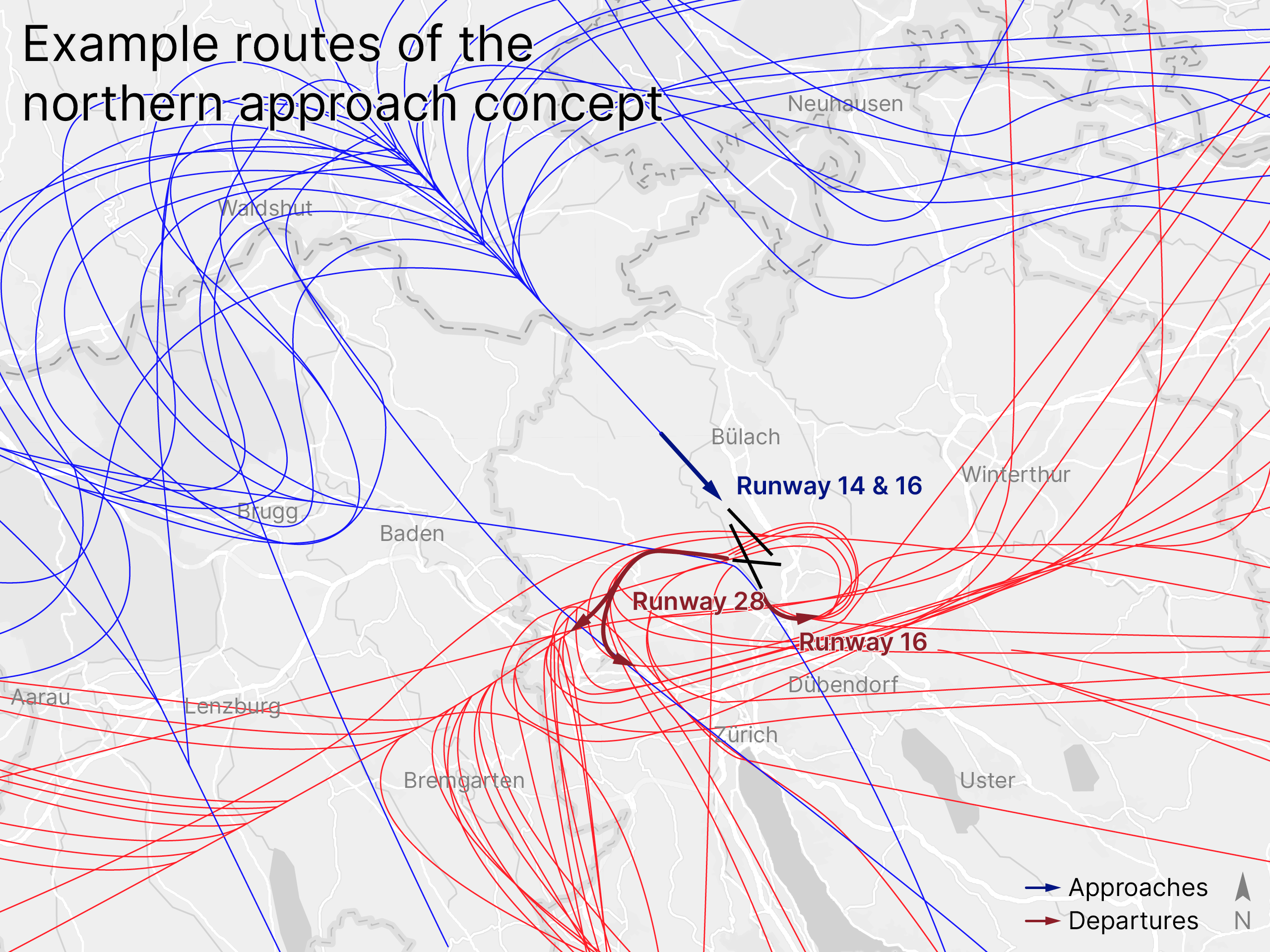
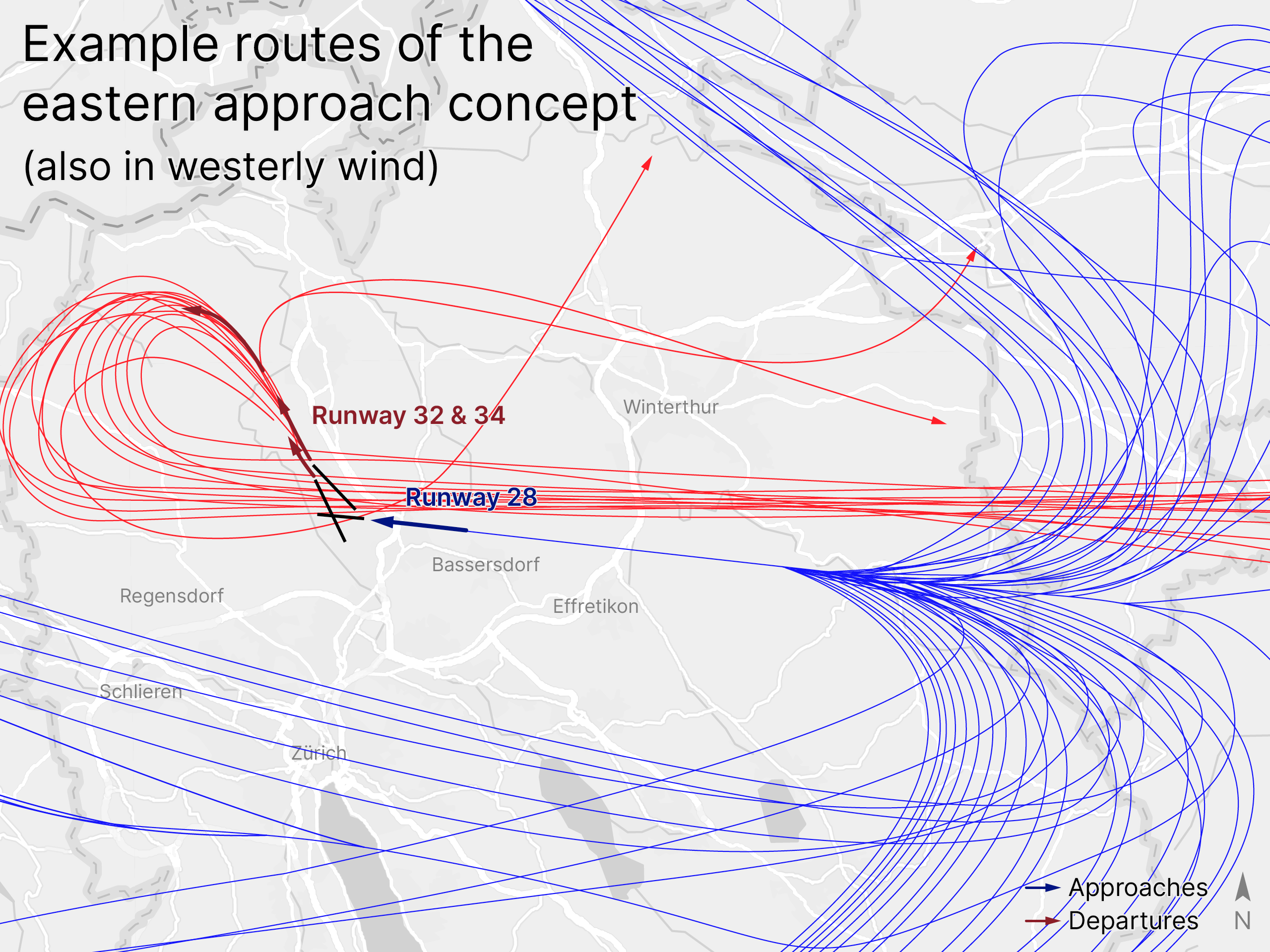
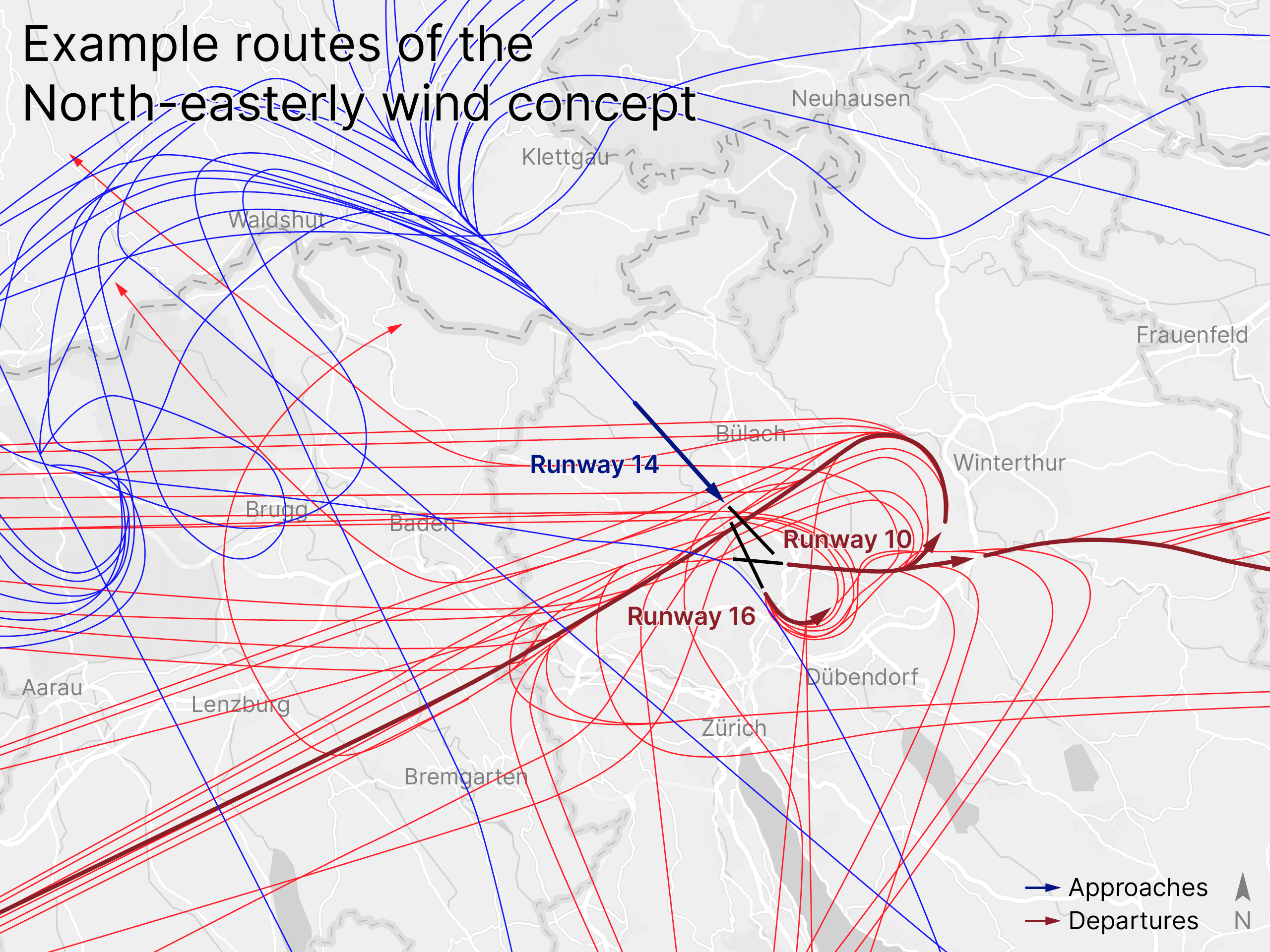
Example Flight Routes
The flight routes shown are examples for illustration purposes only, actual routes may vary.
1/4
Do you have any questions?
The staff of the Aircraft Noise Hotline will be happy to help you.